Using a Modular Barge with an EWP for Bridge Inspection & Repair Work
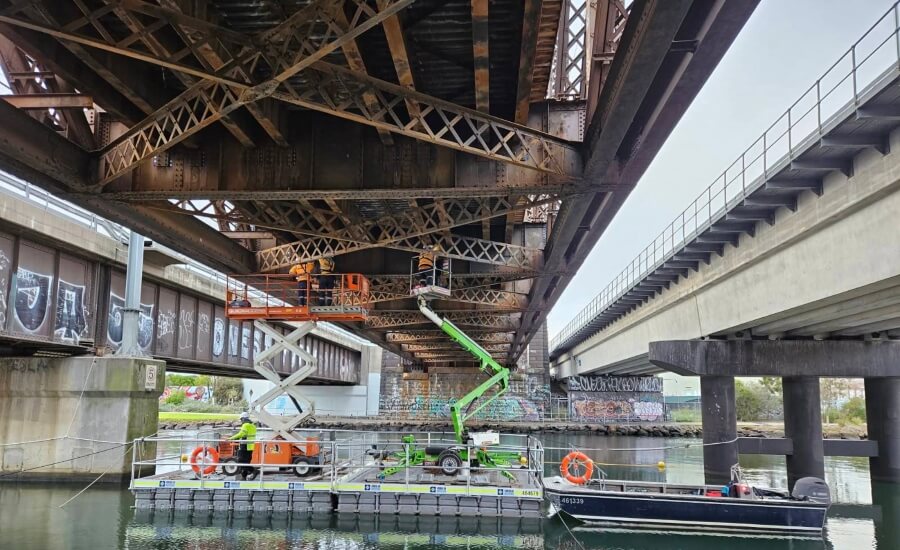
Maintaining bridges on the Yarra and Maribyrnong demands safe, stable access under the deck—often in tight windows and busy waterways. Pairing a modular barge with an Elevated Work Platform (EWP) delivers a fast, compliant, and cost-effective solution for bridge inspections, minor remedial works, and utility installs. Here’s a practical guide to planning and providing that setup with Melbourne Boat Hire.
Why a Modular Barge + EWP?
- Right-sized access: Configure the barge footprint to your work zone—single- or multi-bay—without lane closures.
- Stable working deck: Non-slip surfaces with handrails/kickboards create controlled, compliant work areas.
- Lift where you need it: The EWP provides vertical reach under spans, soffits, beams, and pier faces.
- Rapid mobilisation: Barge sections can be towed/assembled on site to hit tight program windows.
- Integrated safety: Full Stability Assessments combined with rescue boat coverage, traffic management, and a certified crew.
Planning & Engineering Checks (Don’t Skip These)
1) Platform configuration & deck loads
- Confirm EWP operating weight, axle/outrigger point loads, and dynamic factors.
- Select barge modules and deck reinforcement to exceed load requirements.
- Maintain freeboard under all load conditions; consider tool chests, fuel, and crew weight.
2) Stability & mooring
- Use spud poles or a mooring plan to limit movement from current, wind, and wash.
- Keep the EWP centred on the strongest part of the deck; avoid edge loading.
- Review stability (GM) and trim with the EWP at max outreach.
3) Clearance & access
- Survey soffit heights, bracing, and services to confirm EWP reach.
- Plan safe ingress/egress routes and emergency access for the rescue crew.
4) Electrical & hydraulic safety
- Use IP-rated connections, cable management, and spill containment.
- Keep fuels/hydraulics in bunded storage with spill kits on deck.
5) Documentation & approvals
- SWMS/JHAs for over-water work, EWP operations, and barge movement.
- Traffic Management Plan for waterway users; authority permits as required.
- Inductions and toolbox talks for all personnel.
Mobilisation Workflow (Step-by-Step)
- Pre-start: Confirm permits, weather/tide window, comms plan, and emergency roles.
- Assembly: Configure the modular barge to the required footprint; fit handrails, kickboards, bollards, andlighting.
- Stabilisation: Deploy spud poles/mooring lines; verify minimal movement.
- EWP loading: Winch or crane the EWP aboard at a controlled ramp/wharf; position over reinforced deck.
- Tie-down & isolation: Secure the EWP to deck tie points; check fire extinguishers, spill kit, and first aid supplies.
- Functional checks: Run EWP systems; test radios; confirm exclusion zones and signage.
- Operations: Begin the inspection/repair sequence with the spotter/spotter platform; maintain a log of movements.
- Demob: De-contaminate deck, secure waste, remove fixings, and return waterway to normal.
Operating the EWP on Water: Best Practice
- Spotter at all times with radio comms to skipper and EWP operator.
- Slow, deliberate movements—wind and wash amplify sway at height.
- Outreach discipline—avoid sudden slew/boom changes; keep loads central.
- Exclusion zones—clear and signposted; control public interface at banks/wharves.
- Weather triggers—stand down at pre-agreed wind speeds, lightning, or increased river flow.
Environmental Protection
- Spill control: Bunded storage for fuels/hydraulics; spill kits within arm’s reach.
- Debris management: Nets and deck housekeeping; no over-side grinding without capture.
- Silt control: Silt curtains for sediment-generating work; monitor turbidity when required.
- Noise/light: Shield lighting and schedule noisy tasks to minimise community impact.
Traffic Management & Stakeholder Comms
- Permits & notifications with waterway managers, marinas, and nearby projects.
- Navigation safety: Mark the barge with compliant lights/IDs; broadcast operations as required.
- Escort/safety vessels: Camera/crew transfers and a rescue boat on standby during EWP use.
- Event/closure awareness: Coordinate with scheduled regattas, fireworks, or river closures to ensure timely notification and prevent disruptions.
Example Configuration (Indicative)
- Barge footprint: 5 m × 5 m modular deck with non-slip surface
- Barriers: 1.0 m handrails + 100 mm kickboards, gated access
- Stability: Dual spud poles + aft mooring lines
- EWP: Articulated boom, ~200–250 kg SWL basket, diesel/electric hybrid
- Support: Tool lockers, genset, spill kits, first-aid, eyewash
- Crew: AMSA-certified skipper/deckhand + EWP operator/spotter
- (Final specs tailored to your method statement and engineering sign-off.)
Case Snapshot: Under-Bridge Soffit Repair (Yarra River)
A contractor was required to perform soffit repairs and anchor replacements beneath a busy crossing. Melbourne Boat Hire supplied a modular barge sized for an EWP, fitted with complete edge protection and spud poles, and delivered a rescue boat with a certified crew. With a waterway Traffic Management Plan and staged tides, the team completed inspections, patch repairs, and anchor works two days ahead of program—no road closures, zero incidents.
Project Manager’s Checklist
- EWP weight/outreach confirmed against the deck and stability
- Spud pole/anchoring plan approved.
- SWMS/JHAs + inductions complete
- Rescue boat coverage and comms tested
- Electrical/IP ratings; fuel/hydraulic bunding
- Exclusion zones, lighting, and signage are in place.
- Weather/tide triggers and demob plan agreed.
FAQs
Do I need road closures for under-bridge work?
Often no. With barge hire and an EWP, you can access soffits from the water, avoiding lane closures.
Can the barge carry an EWP safely?
Yes—when deck loads and stability are engineered for the specific EWP, including point loads and outreach.
What about permits?
We assist with waterway permits, Traffic Management Plans, and liaise with authorities.
Is a rescue boat required?
For EWP over water, a rescue boat and a trained crew are best practices and are frequently mandated.
How Melbourne Boat Hire Helps
- Modular barge hire configured to your footprint.
- Commercial boat hire (workboats, transfers) and rescue boat standby
- AMSA-certified crew, documentation (SWMS/JHAs), and toolbox templates
- Traffic management and authority liaison
- Accessories: handrails, kickboards, spud poles, bollards, lighting, signage
Planning bridge inspections or repair works?
Let’s scope a turnkey package—barge, EWP integration, crew, safety, and permits—so your team can focus on the job.

